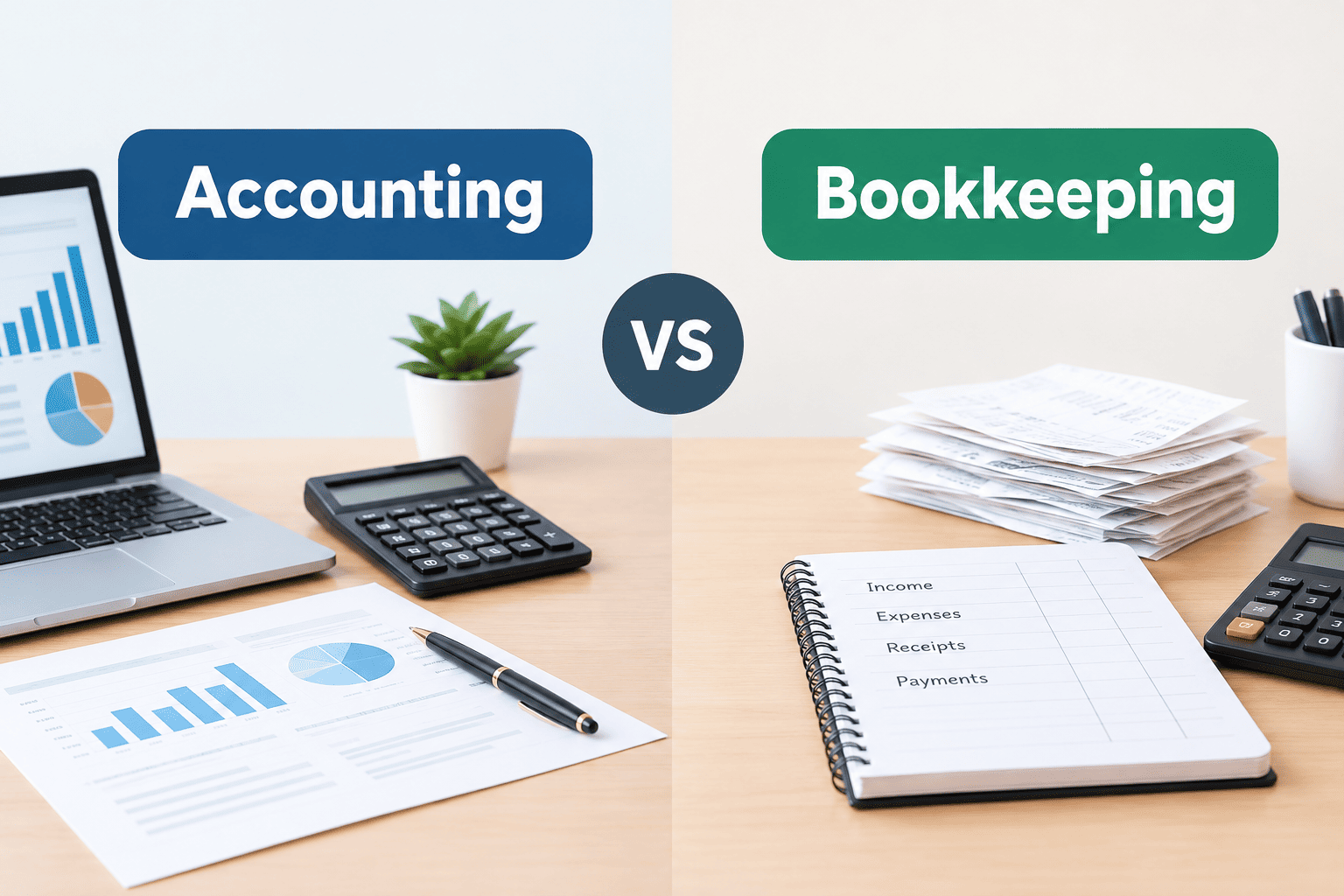
People use “bookkeeper” and “accountant” as if they’re the same job. They’re not — and knowing the difference helps you figure out what you’re actually missing when your finances feel messy or you’re overpaying at tax time.
What a bookkeeper does
Bookkeeping is the day-to-day. Recording sales and expenses, categorizing transactions, reconciling your bank and credit-card accounts, keeping invoices and receipts organized, often running payroll. It’s the steady, behind-the-scenes work that keeps your financial records accurate and current. Good bookkeeping is the foundation — everything else is built on it.
What an accountant does
An accountant takes those clean books and makes them mean something: preparing financial statements, filing your corporate and personal taxes, planning to reduce what you owe, and advising you on decisions. A CPA adds a professional designation and standards on top. Where a bookkeeper records what happened, an accountant interprets it and looks ahead.
Think of it as a relay
The bookkeeper runs the first leg — capturing everything cleanly. The accountant runs the anchor leg — turning it into filings, savings, and advice. If the handoff is smooth (ideally because it’s the same team), you get accurate books and smart tax work. If the two are disconnected, things fall in the gap: the accountant files from messy books, or misses context the bookkeeper had.
Do you need both?
Most businesses do. You need someone keeping the books current (bookkeeping) and someone handling tax and strategy (accounting). For a very small operation they might be the same person; as you grow, you’ll want proper coverage of both. The tell-tale sign you’re missing one: your books are tidy but you’re overpaying tax (missing accounting), or your accountant is great but always working from a shoebox (missing bookkeeping).
We do both under one roof on purpose — clean monthly books flowing straight into CPA-reviewed tax work, no gap in the handoff. If your setup feels like it’s missing a leg, book a consult and we’ll tell you which one.
FAQ
Is a bookkeeper the same as an accountant?
No. A bookkeeper records and organizes your day-to-day finances; an accountant interprets them, files taxes and advises. They’re complementary, not interchangeable.
Do I need both a bookkeeper and an accountant?
Most businesses do. You want someone keeping the books current and someone handling tax and strategy — often the same firm so nothing falls through the cracks.
Can one person do both?
For a small business, sometimes. As you grow, you’ll want solid coverage of both roles, whether that’s a person or a firm that offers each.
Which do I hire first?
If your books are a mess, start with bookkeeping (or a firm that does both) — an accountant can only work well from accurate records.
Does a CPA do bookkeeping too?
Some firms, including ours, offer both bookkeeping and CPA-level accounting together, which keeps the handoff clean.